
Farid Lime Industrial and Mining Complex
From the heart of the mine to the heart of industry...
As a leading company in the transport sector, Ahek Farid leverages strong and extensive global connections to provide its clients—located in various cities and ports across different countries—with optimal logistics solutions at competitive prices.

Get to know us better...
Farid Lime Industrial and Mining Complex, one of the country’s leading lime producers, began its operations in 1981 as a family business; in 2022, under the name “Farid Lime Industrial and Mining Complex,” it continued its path of development and excellence, adopting a modern approach.
Since the very beginning of our operations, maintaining quality, adhering to global standards, and earning the trust of our customers have remained the core principles and values of this organization. By leveraging specialized knowledge, practical experience, and a forward-looking perspective, we have succeeded in producing reliable, consistently high-quality products for various industries across the country.
Mission and Vision
Adopting an interdisciplinary approach, the Farid Industrial and Mineral Lime Complex has consistently sought to integrate engineering expertise, management, technology, and industrial experience to improve processes, enhance productivity, and foster sustainable development. This perspective has enabled the delivery of efficient solutions tailored to the contemporary needs of the industry. Today, supported by a specialized workforce, appropriate equipment, a commitment to quality, and professional accountability, the complex is advancing toward becoming a leader in the nation’s lime and mineral sector—placing continuous development, innovation, and customer satisfaction at the core of its operations.
Company Members



Our Products

Hydrated Lime
This is a white, alkaline, powdered product produced through the controlled reaction of quicklime with water. Due to its high purity and reactivity, it is widely used across various industries. Key applications include water and wastewater treatment; the construction industry (for the production of mortars and modified plasters); soil stabilization and improvement in civil engineering projects; the steel industry (for removing impurities and desulfurization); the chemical industry (for producing calcium compounds); the sugar industry (for juice purification); the pulp and paper industry (to enhance production processes); environmental systems (for controlling gaseous pollutants); the leather industry (for liming and hide preparation); the refining of industrial and edible oils (to remove fatty acids and impurities); and agriculture (for soil pH adjustment).
High-quality hydrated lime must possess high chemical purity, low levels of impurities and insoluble matter, a uniform and fine particle size distribution, appropriate reactivity with water and acids, controlled moisture content, and a bright white color. Furthermore, it should exhibit a high rate and uniformity of hydration and be essentially free of unreacted (raw) particles, ensuring consistent and reliable performance in industrial applications.
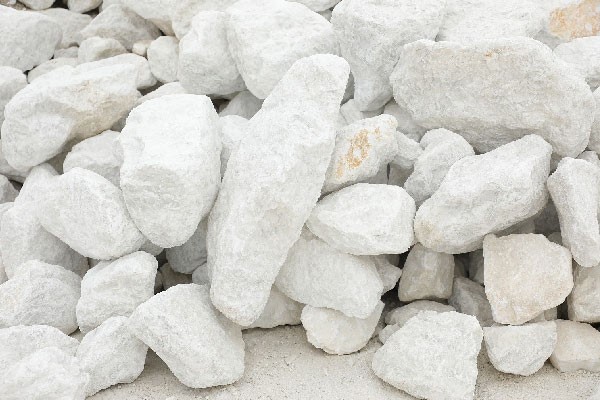
Lump Quicklime
This product is obtained through the calcination of limestone and is supplied in the form of coarse, porous fragments with a high calcium oxide (CaO) content. It serves as a fundamental raw material in numerous heavy and process industries; due to its favorable reactivity and ability to rapidly provide alkalinity, it plays a significant role in the production chain of mineral and chemical substances.
Key applications of lump lime include the production of hydrated lime and micronized lime; use in the steel industry for desulfurization and slag formation; water and wastewater treatment; the chemical industry; soil stabilization and improvement in civil engineering projects; the manufacture of autoclaved aerated concrete (AAC) blocks; sugar refining (for juice purification); and the control of acidic pollutants in industrial processes.
High-quality lump lime must possess high chemical purity (high CaO content), a low percentage of impurities such as SiO₂ and MgO, uniform and complete calcination, an appropriate porous structure, controlled reactivity, and a minimal amount of uncalcined particles. Furthermore, the lumps should be of uniform size, with over-calcination or under-calcination avoided, to ensure consistent and reliable performance in industrial processes.

Micronized Quicklime
This is a powdered product with a very fine particle size and high reactivity, produced through the controlled calcination of limestone followed by grinding to a micron-scale particle size. Due to its high reaction rate, consistent performance, and rapid solubility in industrial processes, it is utilized in a wide range of specialized applications.
Key applications of micronized quicklime include the production of Autoclaved Aerated Concrete (AAC) blocks; use in the steel industry for desulfurization and the removal of impurities; water and wastewater treatment; the chemical industry for the production of calcium compounds; soil stabilization and improvement in civil engineering projects; the sugar industry for juice purification; the control of gaseous pollutants in environmental systems; and use in mineral processing for pH adjustment and the enhancement of chemical reactions.
High-quality micronized quicklime must possess high chemical purity, a very fine and uniform particle size, rapid reactivity with water, a low level of impurities, and controlled moisture content. Furthermore, it should feature a high free CaO content and a strictly controlled particle size distribution—free from coarse or uncalcined particles—to ensure consistent and reliable performance in sensitive industrial processes.
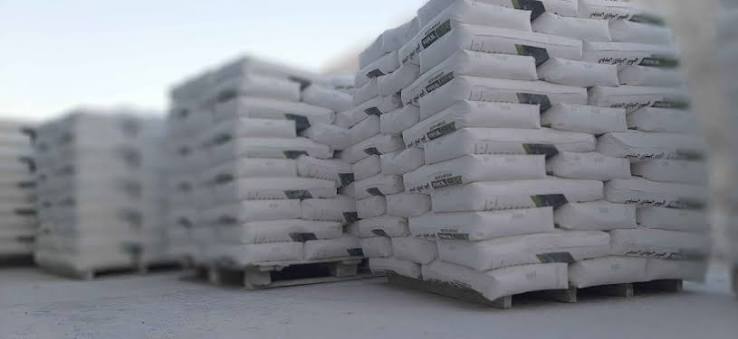
Construction lime
This is a type of hydrated lime that, due to bypassing the precise separation and grading stage in a separator, typically exhibits lower purity and less uniformity compared to industrial-grade hydrated lime. Produced in powder or semi-powder form, it is primarily used in construction and traditional applications, favored for its affordable price and general-purpose utility.
Among the most significant applications of construction lime are the preparation of masonry mortars, whitewashing and plastering of walls, partial soil stabilization in light civil engineering projects, the production of lime slurry, and use in certain traditional construction practices.
High-quality construction lime should exhibit an acceptable degree of hydration, a minimal content of unburnt (raw) particles, a relatively white color, good workability in mortar, and an acceptable level of reactivity with water; however, due to the omission of a separation process, its particle size uniformity and chemical purity may be lower than those of industrial-grade lime.


Social Responsibility
We believe that sustainable success is not solely dependent on economic growth; rather, it is defined by a sense of responsibility toward employees, society, and stakeholders. Consequently, we are committed to playing an effective role in the development of the industry and society by manufacturing high-quality products, upholding professional ethics, and providing services in a responsible manner.
Empowering employees through training, skill development, the creation of growth opportunities, and the provision of a safe, professional environment rooted in mutual respect is one of our core values. Furthermore, by supporting internships and the development of academic talent, we strive to pave the way for the growth of the next generation of industry professionals.
Empathy for those in need and participation in charitable activities are also part of our social mission; alongside our industrial operations, we strive to make a meaningful contribution toward improving the quality of life within the community.
We believe that a better future is built through responsibility, collaboration, and investment in people, and these principles will always guide our activities.